






Short answer: most hotel lobbies are scented with a blend from one of five fragrance families: white tea and fig, fresh citrus with marine notes, sandalwood and soft woods, warm amber and spice, or a light citrus floral. There is no single "hotel scent". Larger hotel groups commission their own signature blend and rarely publish the formula, but almost all of them stay inside these families, because they are easy to notice on arrival and easy to live with for hours.
A lobby scent, ready for home

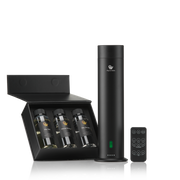
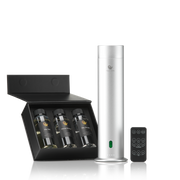
Waterless Aroma Diffuser – Matte Black
The Pure One aroma diffuser: cold-air diffusion without water, six intensity levels and a 1, 4 or 8-hour timer.

London Nights Fragrance Oil – 120 ml
White tea and bergamot over fig and rose, on white musk and cedarwood. 120 ml.
Why a lobby scent has a harder job than a perfume
A perfume has to please one person. A lobby scent has to work for everyone who walks through the door: a guest coming off a long flight, a receptionist halfway through a shift, somebody waiting for a taxi. So it has to register in the first few seconds, settle into the background after that, and stay clear of strong sweetness, food-like notes or anything overpowering.
Hotels also want you to recognise the place, so a group uses the same blend in every property. Scent is closely tied to memory, as we explain in why smells trigger memories.
The delivery matters as much as the blend. Commercial scent suppliers describe cold-air diffusion units placed out of sight in lobbies and corridors, or connected to the building's ventilation, so the scent stays at one low, even level and nobody can point to where it comes from.
The five fragrance families behind the hotel smell
The note structure and the well-known named examples are covered in what a luxury hotel actually smells like. This guide sorts lobby scents by family, because a family is something you can shop for.
1. White tea and fig
This is the family most people mean when they say "that hotel smell". White tea is light and slightly green. Fig adds a soft, leafy fullness underneath. Hotels choose it because it smells clean without smelling of cleaning, and it suits bright lobbies with daylight and pale stone.
Our closest match is London Nights: white tea and bergamot at the top, fig and rose in the heart, white musk and cedarwood in the base. Day Dream also opens with white tea, but its vanilla and sandalwood make it warmer, which fits a bedroom better than an entrance.
2. Fresh citrus and marine notes
Guests often describe this family as "clean linen". Linen is an impression rather than an ingredient: bright citrus, an airy or marine note and a clean musk underneath. You find it in resort and coastal hotels and on spa floors, where the scent should feel like an open window.
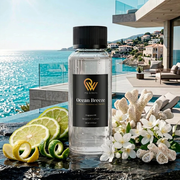
Ocean Breeze sits in this family with bergamot and lemon, a heart of jasmine and marine notes, and amber and musk in the base.
3. Sandalwood and soft woods
Sandalwood is warm, creamy and calm. In a lobby it reads as part of the interior, like timber panelling or a leather chair. Design-led and boutique hotels use it because it suits men and women equally.
We have two scents here. Santal Woods is the creamier one, with carrot seed and white sandalwood, violet and iris, and a base of sandalwood, benzoin resin and iris root. Maison Noir is drier and more minimal: sandalwood with a paper accord, violet and iris, then cedar and amber.
4. Warm amber and spice
This is the classic grand-hotel lobby in the evening, with low light and dark wood. Amber and a little spice add warmth to large rooms full of marble and glass.
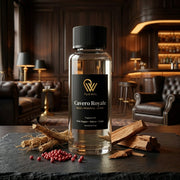
The One is our scent in this family. It opens with cardamom, leather and lemon, moves into cedarwood, cinnamon and sandalwood, and rests on amber, musk, iris and vetiver. For something darker, Malaga Suite pairs bergamot with vetiver and oud over sandalwood, amber and patchouli.
5. Light citrus floral
Sunny city hotels and Mediterranean resorts often choose a citrus opening with a sheer floral heart. Bergamot, mandarin, jasmine and rose all appear in the hotel blends that scent suppliers describe. The florals stay transparent, so the lobby smells bright without turning into a bouquet.
Soleil D'or follows that pattern: bergamot, mandarin and sweet orange, then rose, jasmine and lily of the valley, with oakmoss, amber and ambergris in the base.
Comparison table: family, effect and closest Pip & Wells scent
| Fragrance family | How it reads in a lobby | Typical hotel setting | Closest Pip & Wells scent |
|---|---|---|---|
| White tea and fig | Clean, light, slightly green | Bright, modern lobbies | London Nights |
| Fresh citrus and marine | Airy, like an open window | Resorts, spa floors, coastal hotels | Ocean Breeze |
| Sandalwood and soft woods | Warm, calm, part of the interior | Design-led and boutique hotels | Santal Woods, Maison Noir |
| Warm amber and spice | Enveloping, evening mood | Grand lobbies with dark wood and stone | The One, Malaga Suite |
| Light citrus floral | Bright and generous | Sunny city hotels, Mediterranean resorts | Soleil D'or |
The matches are based on the notes listed for each oil. They are original Pip & Wells fragrances in the same family, not copies of any hotel's own blend. New to top, heart and base notes? Read fragrance notes explained.
How to choose a lobby scent family for your home
Start with the hotel you remember, and with the room rather than the smell. Was the lobby bright and pale, or dim and wood-panelled? Bright rooms point to white tea and fig or to citrus. Darker rooms point to woods or amber. Match the family to the light and materials in your own hallway or living room.
Then try it the way a hotel would use it. Screw the 120 ml bottle straight into the Pure One aroma diffuser, place it near the door you come in through and choose the lowest of the six intensity levels. Set the 1-hour timer, leave the room and walk back in. You should notice the scent in the doorway and have stopped thinking about it by the time you sit down.
Keep to one family per connected space. The full routine, from preparing the room to timing, is in how to make your home smell like a hotel.
Undecided? The diffuser gift sets combine the Pure One aroma diffuser with The One, Day Dream and Ocean Breeze, so you can compare an amber scent, a soft white-tea scent and a fresh one at home. The single oils are in the fragrance-oil collection.
FAQ
What scent do hotels use in the lobby?
Most use a blend from one of five families: white tea and fig, fresh citrus with marine notes, sandalwood and soft woods, warm amber and spice, or a light citrus floral. The exact blend differs per hotel group and is usually kept private.
What scent do luxury hotels use?
Luxury hotels usually have a signature scent made for them, most often built on woods, amber, white tea or restrained florals and diffused at a low, even intensity.
Can I buy the exact scent a hotel uses?
Sometimes. A few hotel groups sell their own scent, but most formulas are not available. Pip & Wells oils are original fragrances and not copies of a hotel blend, so choose by family and by the notes on each product page.
Which hotel lobby scent works best at home?
Warm amber or sandalwood suits a hallway or living room in the evening. White tea and fig suits bright rooms during the day. Start with one family in the room where you come in.
How do hotels make the whole lobby smell the same?
They use cold-air diffusion units placed out of sight or connected to the ventilation system, set to a low, constant level. At home a waterless diffuser on a low setting does the same for one room.