

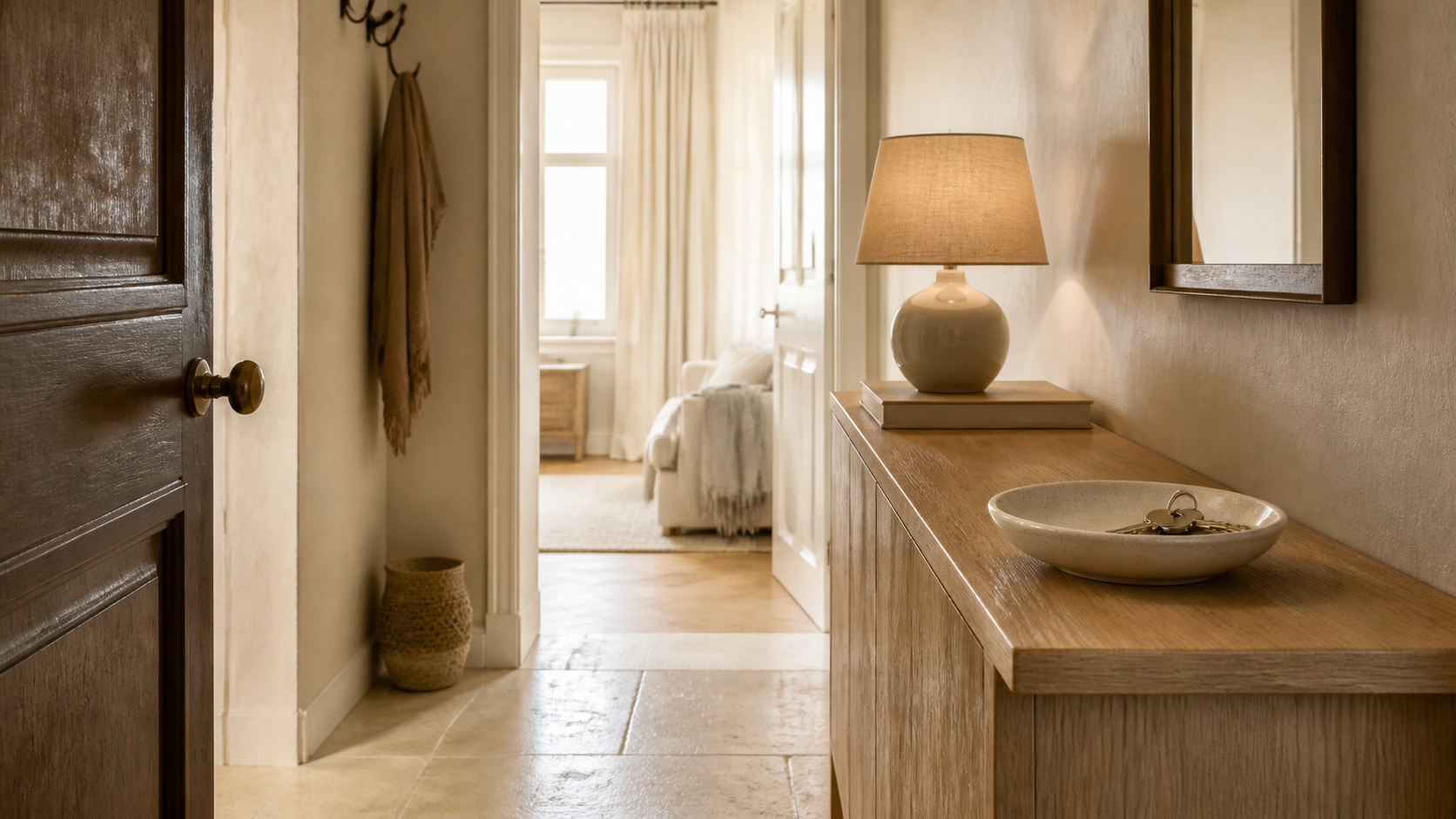
A viewing begins before anyone has opened a cupboard or measured a wall.
The first few moments in a home shape the way the rest of the visit is received. Light, temperature, order, the condition of the hallway and the air in the room all register at once. That does not mean a home needs to look staged beyond recognition. It means the space should allow someone else to imagine living there without being distracted by what needs attention.
Scent belongs near the end of that preparation, not at the beginning. A diffuser cannot repair damp, cover a tired kitchen or make neglected paintwork disappear. It can, however, add a quiet finishing layer once the home is clean, aired and honestly ready to be seen.
Start with the things a visitor can see and smell for themselves
When people prepare a home for a viewing, it is tempting to reach for the quickest visible improvement. A new candle, fresh flowers or a stronger room spray can feel productive because the result is immediate. Yet the order of decisions matters more than the speed of one solution.
Begin with defects. Repair damage that draws the eye. Deal with obvious stains, loose handles, cracked sealant and unfinished small jobs. If a wall is marked, yellowed, peeling or painted in a colour that makes the room feel darker or narrower than it is, repainting may be the sensible choice. The purpose is not to make every room look newly renovated. It is to remove the question mark a visitor might otherwise carry from one room to the next.
Then address odours at their source. Cooking, bins, drains, pets, smoke, moisture and damp textiles each need their own practical response. A fragrance placed beside a problem area rarely makes the problem less noticeable. It can make the room feel as if something is being concealed.
Only after those basics are in place does scent have a useful role. It should support the impression of a well-kept home, not compete with it.
What home staging can and cannot tell us
Home staging is often discussed as though it were a decorative exercise. In practice, its first job is simpler: it helps a visitor read a room. A clear dining table makes the scale of the space easier to understand. A bedroom with fewer personal objects lets someone focus on the light and layout. A tidy entrance gives the rest of the visit a calmer starting point.
The National Association of REALTORS® reported in its 2025 staging survey that many buyer agents felt staging helped people imagine a home as their future home. That finding concerns staging as a whole. It does not show that one scent, one lamp or one cushion changes a sale. It is still a useful reminder that a viewing is experienced as a complete environment, rather than as a list of separate features.
For that reason, the most effective preparation is usually the least theatrical. Let the home look like a home that has been cared for. Clear enough space for the rooms to be understood. Let in natural light where possible. Remove laundry, personal paperwork and crowded surfaces. Keep the temperature comfortable. Then consider the air in the space.
When repainting is worth the effort
There is no universal rule that every seller should repaint before a viewing. Fresh paint is valuable when it solves a real visual problem. It can make a marked hallway feel maintained, soften a highly personal colour scheme or bring consistency to a room where touch-ups are obvious. In those cases, scent is not an alternative. It is a separate, later decision.
There are also homes where repainting adds little. Walls may already be neutral, clean and in good condition. A room may be more improved by washing the windows, changing a tired lampshade or giving a crowded corner some space. The useful question is not, “What is the most dramatic change I can make?” It is, “What would stop a new visitor from seeing this room clearly?”
That question prevents two common mistakes. The first is spending time and money on work that does not improve the experience of the visit. The second is treating a fragrance product as a shortcut around maintenance. A considered home needs both honesty and restraint.
The role of scent: a background cue, not a performance
Ambient scent research points to a careful conclusion. A pleasant scent can influence how a setting is experienced, but context, familiarity and intensity all matter. Research in retail environments is not evidence that a fragrance can produce a property outcome. A person walking through a shop is not making the same decision as a person viewing a home.
The practical lesson is still relevant. A scent that is simple, low in intensity and appropriate to the space is less likely to distract. A strong or heavily layered fragrance asks the visitor to notice it. That is the opposite of the aim during a viewing.
Think of scent as you would soft background lighting. It can make a prepared room feel complete, while drawing no attention to itself. If someone says, “This house smells strongly of perfume,” the setting is doing too much. If the room simply feels fresh and composed, the balance is closer to right.
A practical scent protocol before a viewing
A subtle result is easier to achieve when the preparation follows a fixed order:
- Remove the source first. Empty bins, clean the kitchen, check drains, wash pet bedding and investigate any damp or smoke smell. Do not try to fragrance over a persistent odour.
- Clean fabrics as well as surfaces. Curtains, rugs, throws and upholstered furniture hold scent long after a room has been tidied.
- Air the home before guests arrive. Open windows where the weather and security allow. Fresh air gives you a more reliable starting point than a fragrance layered over stale air.
- Choose one scent direction. Different scents in different rooms can make the home feel fragmented. One restrained profile is easier for a visitor to take in.
- Use the lowest practical setting. The goal is a gentle background impression. A higher setting does not make the preparation more convincing.
- Ask for a fresh opinion. People become accustomed to the smell of their own home. Ask someone who has just arrived whether the room feels neutral, fresh or too perfumed.
- Place scent away from problem areas. A diffuser beside a litter tray, drain or cellar door can invite exactly the wrong interpretation.
- Let the room lead. Switch the diffuser off before the viewing if the scent has already settled into the space. The product should not become the subject of the visit.
- Be ready to go scent-free. Some visitors prefer a completely neutral home, and a scent-free viewing is the better choice where sensitivity or personal preference may matter.
Choosing a fragrance with restraint
For a viewing, a clean and airy fragrance direction is often easier to keep subtle than one that is sweet, spicy or theatrical. A light citrus, gentle green note or soft linen-like impression may suit a bright, open home. A warmer scent can work in a more traditional interior, but it needs an even lighter hand. The home itself should always set the tone.
Ocean Breeze can be considered when a clean, fresh character suits the property. It is not a formula for a successful viewing, and it should never be used to mask a problem. Test it at a low level in the actual space first. The right result is understated enough that visitors notice the home before they notice the fragrance.
If you are unsure whether a diffuser fits the room, there is no need to force the decision. Clean air, an open window and a well-prepared space are already a strong foundation. Those who do want to explore the format can look at waterless aroma diffusers as a finishing detail for the wider home, not as a substitute for the practical work that comes first.
What a visitor should be able to notice instead
The best outcome from this process is not a memorable scent. It is a home that feels easy to enter. The hallway is clear. The kitchen feels clean. The bathroom looks cared for. The living room has room to breathe. Nothing pushes for attention, and nothing asks to be explained away.
That effect comes from decisions made in the right sequence. Repair what is damaged. Clean what carries odour. Ventilate what feels stale. Simplify what is crowded. Use a subtle scent only when it genuinely supports the atmosphere you have already created.
A diffuser cannot replace maintenance. It can add the final layer between a home that merely looks clean and one that feels considered from the moment a visitor enters.
Your Questions, Answered.
Can an aroma diffuser replace repainting before a home viewing?
No. Repainting is worth considering when walls are stained, damaged, peeling or visually distracting. A diffuser is a finishing detail for a home that is already clean and maintained. It cannot resolve a visible repair issue.
What scent is suitable when preparing a home for viewing?
Choose one light, familiar scent direction that fits the home. Fresh, airy or gently green notes are often easier to keep understated than rich, sweet or strongly spiced fragrances. Test the scent in the room before the viewing and keep the intensity low.
How strong should a home smell during a viewing?
Very subtle. A visitor should experience a clean and cared-for home, rather than identify a strong fragrance. Begin with the lowest practical setting and ask someone who has just arrived for an honest impression.
Is the smell of baking a good idea for a viewing?
Only if it happens naturally and does not compete with the home. Deliberately creating a strong food scent can feel staged, and food odours may linger or divide opinion. Clean air and a restrained scent approach are easier to control.
When is it better not to use a diffuser?
Do not use a diffuser to hide smoke, damp, pet, drain or cooking odours. Solve the cause first. It is also sensible to keep the home scent-free when you cannot judge the intensity reliably or when a neutral environment will suit the visit better.