

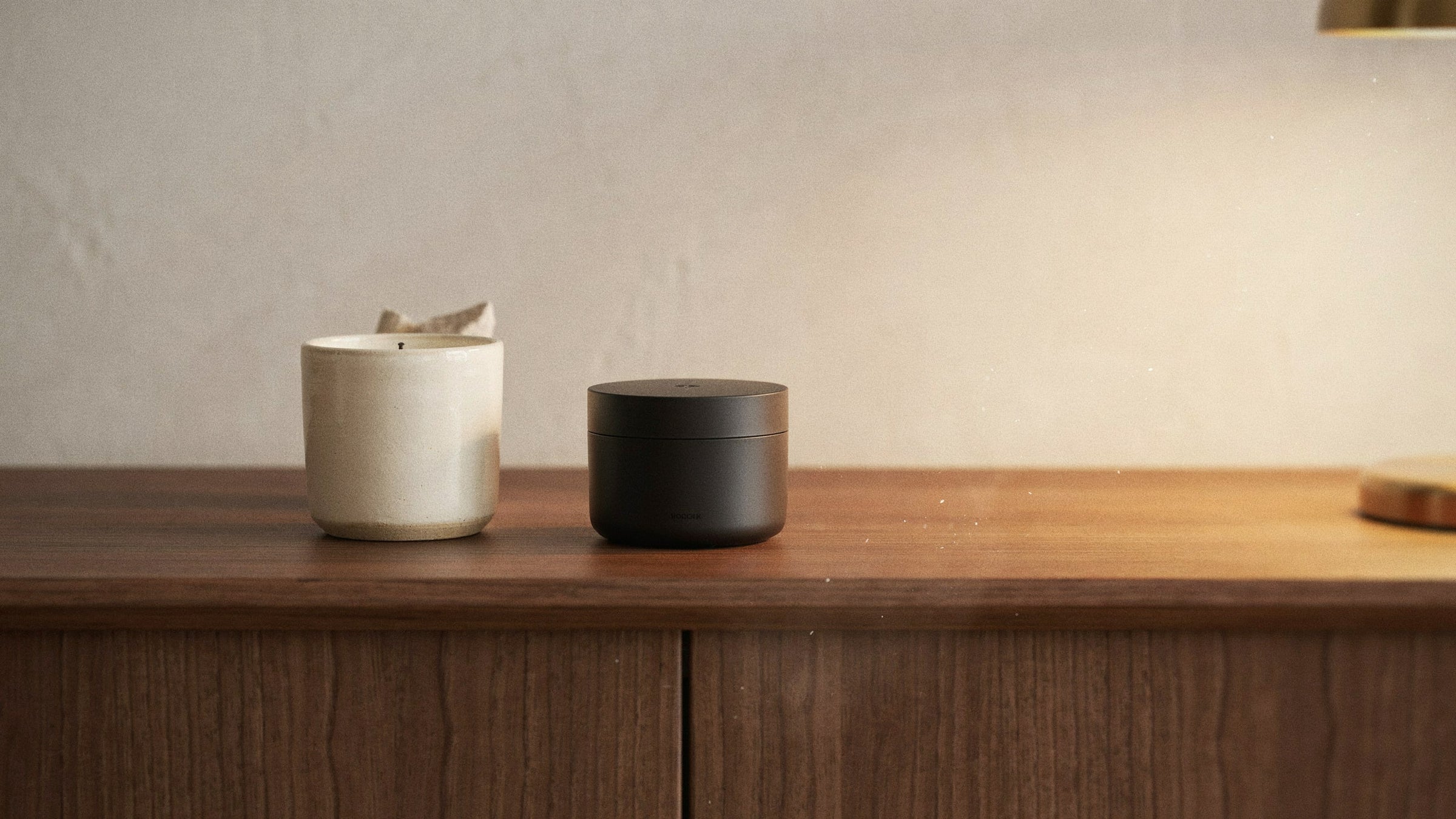
A waterless scent machine is usually the better choice when you want a steady, adjustable atmosphere through the day. A scented candle is better when you want a visible ritual with a clear beginning and end. The decision is less about which object is superior and more about the kind of moment you are trying to create. A scent machine, meaning a waterless diffuser that disperses compatible fragrance oil without added water, can sit in the background of a shared routine. A candle asks for attention: it is lit, enjoyed and extinguished. Both can make a home feel more deliberate, but they do different work.
Choose the rhythm before you choose the object
The central difference is time. A waterless scent machine is built for an atmosphere that can accompany a room as life happens in it. You can decide when it runs and, where the device offers it, adjust the level so fragrance supports the room rather than becoming the event. That makes it useful when the day has several transitions: arriving home, working at the table, preparing for visitors or settling into the evening.
A scented candle creates a more bounded occasion. Lighting it gives the moment a visible threshold. The flame changes the room before fragrance is even considered, because it draws the eye and asks the household to recognise that it is there. Extinguishing it closes the ritual. For a bath, a meal that has already been laid, or a quiet hour with a book, that beginning and ending can be exactly the point.
Neither format wins every comparison. The useful question is whether you want fragrance to remain present while the room changes, or whether you want it to mark one period of time. Once that distinction is clear, the choice becomes less technical.
What each format changes in a daily routine
A scent machine gives you control over continuity. It can be part of the preparation rather than part of the performance: set the room before the first person arrives, then let the conversation take over. A candle gives you a focal point. It can make an ordinary pause feel intentional because the act of lighting it separates that pause from the rest of the day.
The following comparison is about occasions, not about a generic score.
| Moment | Waterless scent machine | Scented candle |
|---|---|---|
| Morning transition | Useful when you want the room to feel prepared while you move through practical tasks. | Usually a deliberate choice, best when the flame itself belongs to the ritual. |
| Working or shared daytime | Suited to a background atmosphere that can be adjusted to the pace of the room. | Requires the attention appropriate to an open flame, which may not suit a busy routine. |
| Before guests arrive | Lets you prepare the atmosphere before the doorbell and keep the table or console visually clear. | Works when the visible warmth of the candle is part of the welcome and someone remains present. |
| Quiet evening pause | Supports the room without making a visual demand. | Gives the pause a defined, visible centre and a natural closing action. |
| End of the evening | Can be switched off when the room no longer needs fragrance. | Needs to be extinguished before you leave the room or go to sleep. |
The table does not say that one object belongs in one kind of home. It shows that the objects ask different things of the people using the home. A machine can be part of a repeatable household rhythm. A candle creates a small ceremony, and a ceremony is most convincing when there is time to notice it.
Control is useful when the room has several uses
Many rooms do not keep one identity all day. A kitchen table can be a work surface at noon and a place for friends later. A living area can move from school bags and calls to dinner and conversation. In that setting, a waterless scent machine offers a practical form of control: fragrance can be present for a particular part of the routine, then reduced or stopped when the room changes again.
That does not make a machine impersonal. Control can be a way of being considerate. In a shared home, the person choosing the fragrance can respond to the actual household rather than turning a single strong moment into the room's permanent condition. If you are still deciding among fragrance formats more broadly, our guide to choosing a scent diffuser explains the categories without treating every diffuser as the same thing.
A candle offers a different kind of control. Its limits are obvious. You light it when you want it, keep it in view, and put it out when the moment ends. There is no need to make it do background work. In fact, a candle often feels most satisfying when it is allowed to be a small occasion rather than a substitute for every other source of fragrance in the house.
A flame changes the safety conversation
A burning candle is an indoor combustion source, so its use comes with responsibilities that do not apply in the same way to a waterless scent machine. Keep a lit candle under supervision, follow its label, keep it away from combustible materials, and extinguish it before leaving the room or going to sleep. These are not decorative cautions. They are part of what choosing a candle means.
A waterless scent machine removes the open-flame combustion hazard. That is a meaningful practical difference, especially in a household where the evening is busy or attention shifts easily. It does not mean that waterless fragrance is emission-free, healthier, non-toxic or suitable for every person, child or pet. Scented products and the rooms in which they are used vary, so the device instructions and the fragrance guidance remain important. For a focused discussion of households with children or pets, read our waterless-diffuser safety guide.
The fair comparison is therefore not “safe” versus “unsafe”. It is a comparison between two different responsibilities. With a candle, the visible flame is the central boundary. With a waterless machine, the key boundary is thoughtful use of the device and fragrance according to their instructions, without assuming that the absence of a flame settles every air-quality or sensitivity question.
When visual ritual matters more than consistency
A candle earns its place because it contributes more than scent. The vessel, the pool of light and the deliberate act of striking a match can make a table or sideboard feel settled. This is why a candle can be the better choice even when a scent machine would be more convenient. Convenience is not the only value in a home.
Choose a candle when the flame is part of the experience you want to create. Perhaps you are sitting down after a long day, serving a slow supper, or giving yourself a short period without screens. The candle does not need to scent the whole routine. Its value lies in concentrating attention on one part of it.
That concentration also explains why candles can be less suitable for some everyday moments. If you are moving between rooms, answering the door, cooking, helping someone with a task or preparing to sleep, the candle asks for a level of attention that the moment may not have available. In those cases, its ritual quality becomes a reason to choose another format rather than a reason to force it into the routine.
When a quiet background is the better design choice
A waterless scent machine is strongest when fragrance should support the room rather than become its visual centre. It can sit on a console or shelf and allow the furniture, flowers, food or people in the room to remain the focus. That restraint is useful when you want guests to notice a composed atmosphere without making them feel that they have entered a performance.
Preparation is a good example. If people are coming over, you may want the entry and main gathering space to feel ready before they arrive, without lighting a candle while you are still carrying plates, opening windows or changing clothes. A waterless machine can suit that sequence. For a broader hosting routine, our guide to scenting your home before guests arrive starts with the order of preparation, not with a product list.
The same logic applies to routines that repeat. A machine can be used as one considered element of arriving home, beginning the evening or resetting the room after a busy afternoon. Repetition does not make the ritual less personal. It makes the atmosphere easier to maintain without asking you to stage it from scratch each time.
The practical answer for most homes
If your priority is a controlled fragrance presence that can follow the changing pace of the day, choose a waterless scent machine. If your priority is a visible, time-limited ritual that you can supervise and close, choose a scented candle. A home can hold both, provided each is given the job it does best.
The decision becomes clearer when you stop asking which format is universally better. Ask what the next hour requires. A table prepared for guests may benefit from an atmosphere already in place. A quiet bath may deserve the contained ceremony of a candle. A shared evening with several moving parts may call for neither until the room is ready.
Pip & Wells Pure One is a waterless scent diffuser for the first of those roles: a composed background fragrance that can be adjusted to your routine. If that is the role you want fragrance to play, explore the waterless aroma diffuser collection. If you want a visible evening ritual, choose a candle and give its flame the attention it requires.
Your Questions, Answered.
Is a scent machine better than a scented candle?
Neither is better in every situation. A waterless scent machine is usually more suitable for a consistent, adjustable background atmosphere. A candle is usually more suitable when you want a short, visible ritual and can supervise the flame.
Can I use a scented candle every evening?
You can decide that according to the candle's label and your household routine, but a lit candle should always be supervised and extinguished before you leave the room or go to sleep. Choose it because you have time for the ritual, not because it has become an unattended background habit.
Does a waterless scent machine make the air healthier?
No such conclusion follows from the absence of a flame. A waterless machine avoids open-flame combustion, but that does not make it emission-free, healthier or universally suitable. Follow the device and fragrance instructions, and make a considered choice for your household.
Which option is better before guests arrive?
A waterless scent machine often suits preparation because it can establish a background atmosphere before guests arrive. A candle can work once the room is set and the flame is part of the welcome, provided someone remains present to supervise it.
Can I own both a scent machine and scented candles?
Yes. Many homes benefit from assigning them different roles: a waterless machine for the changing rhythm of daily life, and candles for moments when visible light and a clear ritual are the point.