

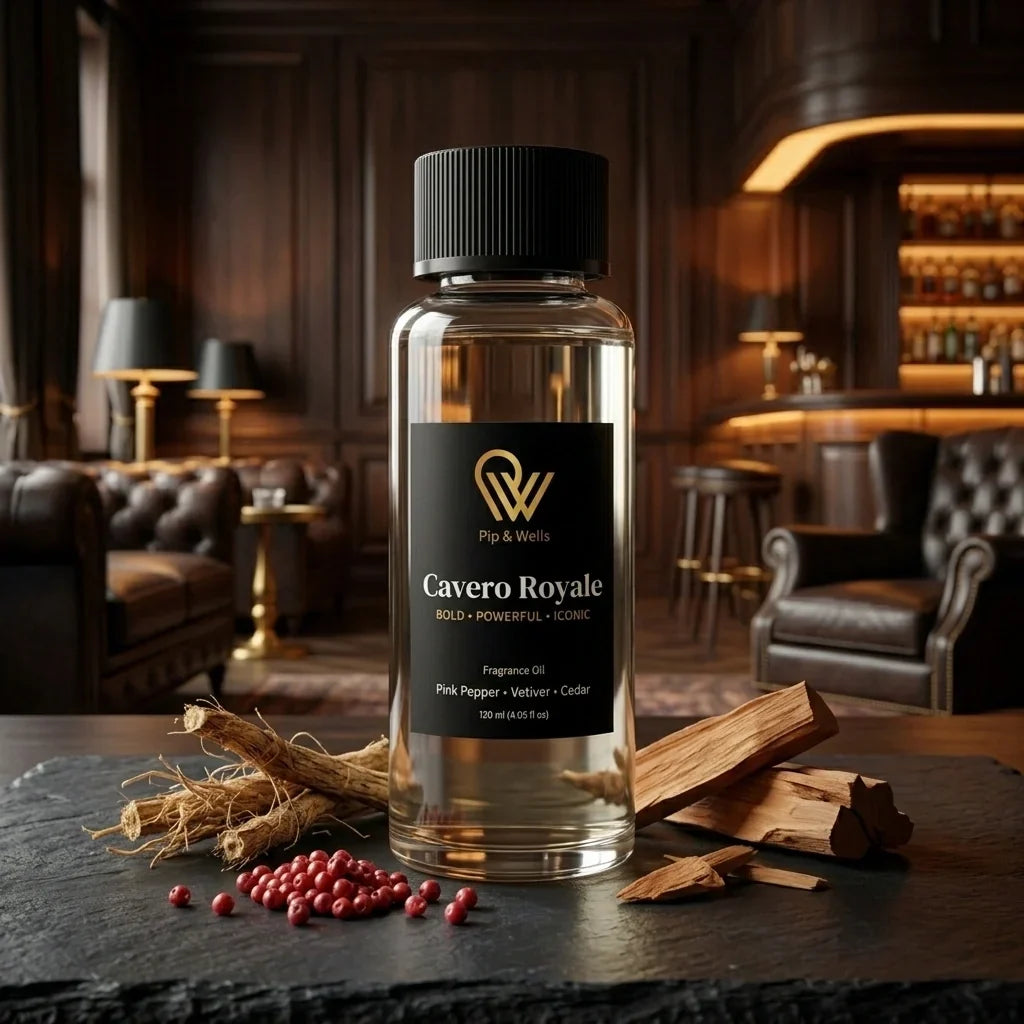
Store fragrance oil upright in its original, tightly closed bottle, away from direct sunlight, strong heat and sources of contamination. Keep the label legible and follow the product-specific storage instructions. If a safety data sheet is supplied, its handling, storage and stability sections take priority over general advice.
How to store fragrance oil day to day
A closed cupboard in a room with a reasonably stable indoor temperature is usually a more suitable place than a sunny windowsill, bathroom ledge or hot utility area. The aim is simple: limit avoidable exposure to light, heat, air and moisture while keeping the bottle secure.
- Keep the original bottle. It carries the product identity, batch information and any handling instructions you may need later.
- Close the cap fully. Do this after filling or changing the diffuser and wipe visible residue from the outside.
- Store it upright. This reduces prolonged contact between the oil and the cap or seal.
- Choose shade and stability. Avoid direct sun, radiators and places with repeated temperature swings.
- Prevent contamination. Do not return used oil to the original bottle or insert an unclean tool.
- Keep it inaccessible. Store the bottle where children or animals cannot reach or knock it over.
Why light, heat and air matter
Fragrance oils are mixtures, and different formulations can respond differently during storage. Light, heat and repeated contact with air can contribute to change over time, but this guide does not assign a universal rate or expiry date to Pip & Wells oils. That would require product-specific stability information.
For the same reason, a slight colour difference is not enough on its own to decide that an oil is suitable or unsuitable. Check the label, batch information and any supplier guidance. If the product has changed unexpectedly in smell, clarity, consistency or packaging condition, pause before putting it into the diffuser and contact support.
Does fragrance oil expire?
There is no reliable shelf-life number that applies to every fragrance oil. Composition, packaging, whether the bottle has been opened and storage conditions all matter. The current Pip & Wells dossier does not contain a product-specific stability or shelf-life specification, so this article does not promise a fixed number of years.
Do not confuse shelf life with in-use bottle duration. The estimate that a 120 ml Pip & Wells oil lasts about 2–4 months describes use in a diffuser, depending on intensity, room size and daily operating time. It does not say how long a stored bottle remains within specification. Read how long diffuser oil lasts in use for that separate question.
What to check before using a stored bottle
- The bottle and cap are intact and not leaking.
- The label is readable and identifies the intended product.
- There is no unexpected material around the opening.
- The oil has not changed in a way that concerns you.
- The oil is intended for the device you plan to use.
Fragrance oil and essential oil are not interchangeable labels. The guide to diffuser oil versus essential oil explains why device compatibility and product information matter.
Where to find authoritative storage information
The product label is the first practical reference. A product-specific safety data sheet may add handling and storage conditions in Section 7 and stability information in Section 10. Regulatory guidance from ECHA and OSHA explains the role of those sections, but it does not replace the supplier’s document for the exact oil.
If the label and an online article disagree, follow the current supplier information. Ask Pip & Wells support for the relevant document when a storage condition or older bottle is uncertain.
Frequently asked questions
Can I store fragrance oil in the fridge?
Do not assume refrigeration is suitable. Follow the product-specific label or SDS. Cold storage can introduce temperature changes and condensation when the bottle is moved.
Is a bathroom cabinet a good place?
Only if it remains dry, secure and reasonably stable in temperature. A cupboard exposed to steam and repeated warmth is less suitable than a dry interior cabinet.
Can I pour the oil into a decorative bottle?
Keeping the original bottle preserves identification and handling information and avoids uncertainty about the new container’s compatibility.
What should I do with a bottle I no longer trust?
Do not test it by smell close to the opening or pour it into the device. Keep it closed and contact the supplier for product-specific advice, including appropriate disposal information.
To choose a fragrance with a clear product identity, explore the Pip & Wells fragrance oils. The guide to top, middle and base notes can help narrow the profile.
Leave a comment
This site is protected by hCaptcha and the hCaptcha Privacy Policy and Terms of Service apply.