

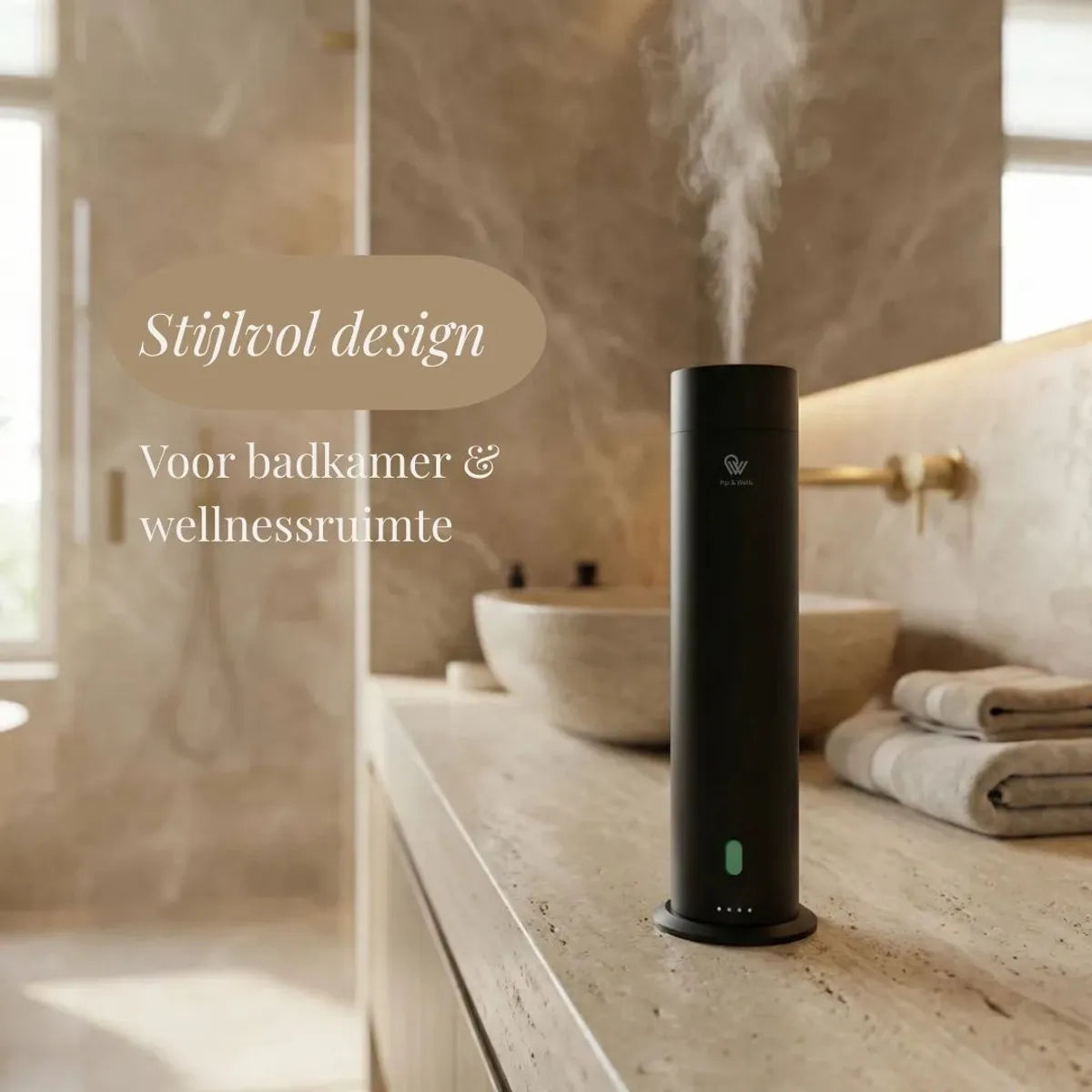
A bathroom needs a diffuser that can handle humidity and cut through strong competing smells without turning cloying in a small, enclosed space. A waterless cold-air diffuser, positioned away from direct splash and steam, on a clean, fresh scent profile, works better here than reed diffusers or candles — both of which struggle with humidity and, in a candle's case, are a poor match for a room people use with an open flame risk nearby.
Why bathrooms are difficult to scent
Three things make bathrooms harder than any other room. Humidity from showers and baths affects how some fragrance formats perform and can encourage mould in porous diffuser materials like reed sticks. Strong, specific competing smells need to be genuinely cut through rather than layered on top of. And most bathrooms are small with limited ventilation — often just an extractor fan — so a scent that is well judged in a living room can feel overwhelming in a much smaller volume of air.
Positioning away from water
Keep the diffuser away from direct water exposure — not on the edge of a basin or next to the shower, but on a shelf, windowsill or cabinet top a reasonable distance from splash zones and steam. This protects the unit and also means it sits somewhere with better airflow than directly beside the shower, where steam otherwise dominates the air the diffuser is trying to scent.
Choosing a bathroom scent
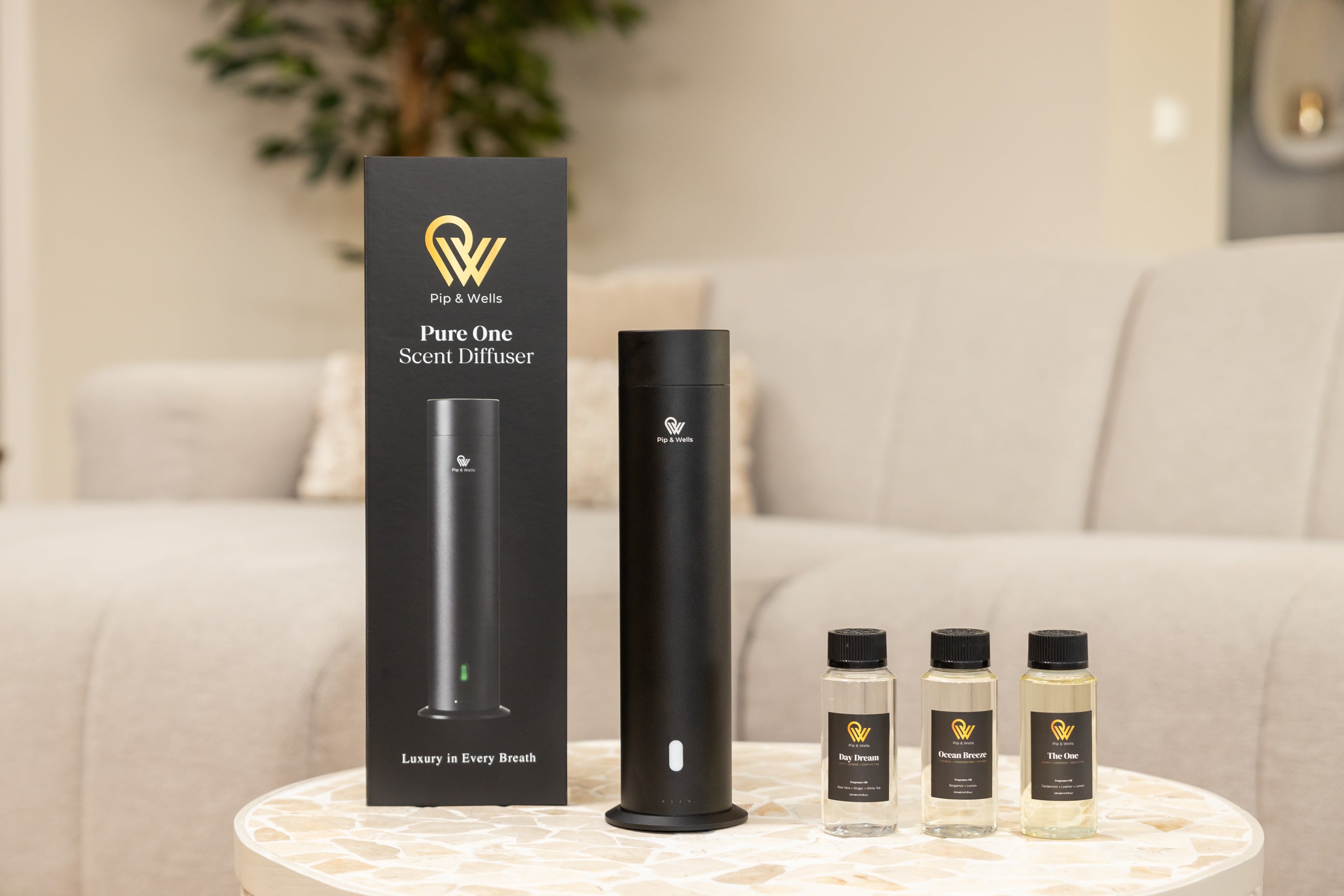
Clean, fresh, slightly soapy or green notes generally work best — they read as "clean" rather than competing with the room's own associations. Very sweet, heavy or gourmand scents can feel mismatched in a bathroom context, and can amplify rather than mask strong smells. A crisp, marine-adjacent profile such as Ocean Breeze tends to suit bathrooms particularly well for this reason.
Ventilation still matters
If your bathroom has an extractor fan, running it after a shower alongside the diffuser — rather than instead of it — gives better results than either alone. The fan clears steam and moisture-heavy air; the diffuser then has a drier, more receptive space to scent, rather than fighting a room saturated with steam.
Guest bathrooms vs. everyday bathrooms
A guest bathroom or downstairs cloakroom, used briefly and infrequently, can run at a slightly higher setting since the priority is an immediate, noticeable impression. A family bathroom used many times a day benefits from a lower, more consistent setting — the goal there is an ambient baseline rather than a burst of scent every time someone walks in.
Frequently Asked Questions
Where should a diffuser go in a bathroom?
On a shelf, windowsill or cabinet top away from direct splash zones and steam — not on the edge of a basin or beside the shower. This protects the unit and keeps it away from the area where steam dominates the air.
What scent works best in a bathroom?
Clean, fresh or marine-adjacent notes generally work better than sweet or heavy scents, which can feel mismatched and can amplify rather than mask strong smells in a small, enclosed room.
Should I run the extractor fan and diffuser together?
Yes, this generally works better than either alone. The fan clears steam and moisture-heavy air, leaving a drier space that the diffuser can scent more effectively afterward.
Related: Where to Place a Diffuser for the Best Scent Coverage · Why Doesn't My Home Smell Good for Long? · Waterless vs. Ultrasonic Diffuser
Leave a comment
This site is protected by hCaptcha and the hCaptcha Privacy Policy and Terms of Service apply.