

You have decided you want a diffuser. That part is easy. Now you are facing a choice that most retailers gloss over — and one that will determine whether you end up with something that genuinely transforms your home, or a device that quietly disappoints you after a few weeks.
The market is dominated by two technologies: ultrasonic (water-based) and waterless cold-air (nebulising). They cost roughly the same. They both put scent into the air. But they work on entirely different principles, and the difference in result is not subtle.
The Short Answer
Waterless cold-air diffusers atomise fragrance oil without water and usually give stronger, more even coverage across a larger room. Ultrasonic diffusers dilute a few drops of oil in a water tank and produce a lighter mist. Which is better depends on room size, the scent intensity you want and how much maintenance you are willing to do.
Are Waterless Diffusers Better?
Waterless diffusion can suit a larger room when stronger fragrance and adjustable output matter. An ultrasonic device can suit a small room when a lighter mist and modest humidification are desired. "Better" depends on the specifications of the exact devices, the room and the maintenance you are willing to do.
How an Ultrasonic Diffuser Works
Ultrasonic diffusers are the most widely sold type — available in every homeware shop and on every online marketplace. The principle is simple: fill a water reservoir, add a few drops of fragrance or essential oil, and use high-frequency vibration to break the mixture into a fine visible mist that rises into the air.
The mist you see is mostly water. The fragrance travels along with it.
These devices are popular because they are cheap to produce, visually appealing with their mist effect, and can double as light humidifiers. For basic use in a small room, they do what they say. But for actual fragrance performance — the kind that makes a room smell genuinely good — they come with serious limitations.
How a Waterless Cold-Air Diffuser Works
A waterless cold-air diffuser — also called a nebulising diffuser — works on a fundamentally different principle. Instead of water, it uses pressurised air to atomise pure fragrance oil directly into ultra-fine dry particles. No heat. No water. No visible mist.
The result is an invisible fragrance aerosol without a water tank or heat source. Perceived strength and distribution still depend on the formulation, device, setting, placement and airflow.
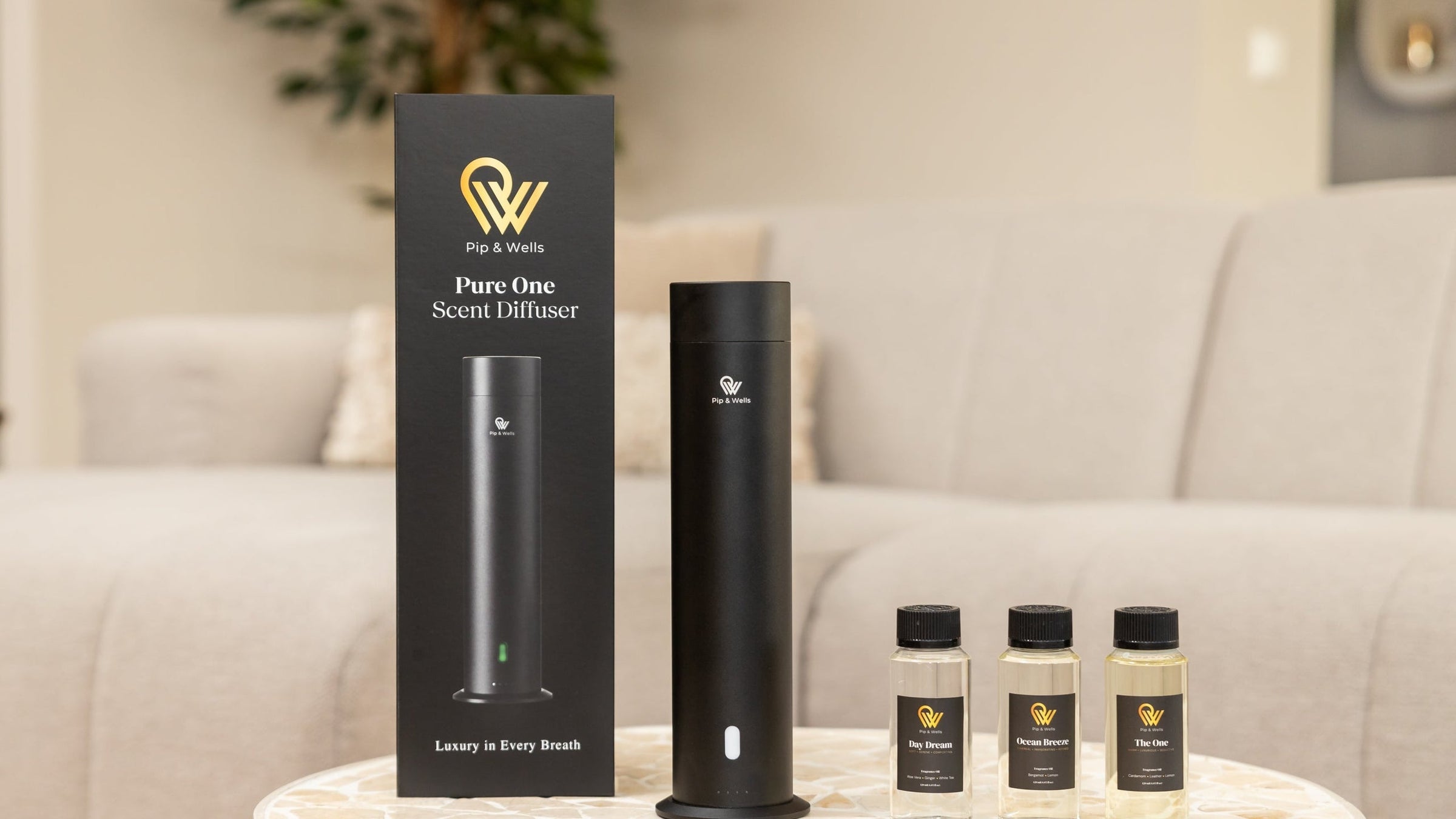
Cold-air diffusion is widely used in hotels, spas and retail because adjustable systems can distribute undiluted fragrance through larger spaces. Results still depend on the device, setting, room layout and airflow. The Pip & Wells waterless aroma diffuser uses this technology and has a stated coverage of up to approximately 100 m² under suitable conditions.
The Real Differences — Side by Side
| Criterion | Ultrasonic (Water-Based) | Waterless Cold-Air |
|---|---|---|
| Scent quality | Oil is mixed with water; the perceived profile depends on dose and device | Oil is atomised without water; perception still depends on formulation and setting |
| Coverage | Use the model's stated coverage | Use the model's stated coverage; Pure One states up to approximately 100 m² |
| Consistency | Varies with water level, dose and device | Varies with setting, oil level and device |
| Maintenance | Refill, empty, dry and clean as its manual directs | No water tank; follow the device-specific cleaning instructions |
| Water-tank hygiene | A used tank needs regular emptying, drying and cleaning | No standing-water tank; fragrance-contact parts can still need cleaning |
| Surface residue | Mist can settle near the device; placement matters | No water mist; place the device as its instructions direct |
| Noise | Noise varies by model and setting | Noise varies by pump, model and setting |
| Running cost | Compare specific devices: cost depends on dose, setting, runtime and bottle price | |
For a closer look at what each type means for your bottle, see how long diffuser oil lasts by diffuser type.
Where Ultrasonic Diffusers Fall Short
Water dilutes the fragrance
An ultrasonic diffuser mixes a small amount of oil with water before releasing a visible mist. That can change the perceived intensity and character compared with atomising fragrance oil without water. The exact result depends on the oil, the number of drops, the device and the room; it is not accurate to claim that every ultrasonic diffuser removes the same notes.
Water tanks require regular cleaning
A water reservoir can support microbial growth when it is left dirty or damp between uses. Empty, dry and clean an ultrasonic tank on the schedule in its own manual; do not rely on a universal weekly rule. Anyone with allergies or respiratory sensitivity should follow individual medical advice rather than assuming either diffuser type is automatically suitable.
Coverage is model- and room-specific
Ultrasonic mist can settle near the device, but the real coverage varies with the model, dose, room size, airflow and placement. Compare the manufacturer's stated coverage and start with a lower dose rather than applying one distance rule to every device.
The visible mist becomes visually dated
The mist effect looks appealing in product photos. In a considered interior, the plastic reservoir and rising vapour read more as appliance than design object. This is subjective, but worth noting if you have invested thought into how your home looks.
Where Cold-Air Diffusers Excel
You smell what the fragrance was designed to smell like
Cold-air diffusion atomises fragrance oil without first mixing it with water. Many users experience that as a fuller or more direct scent profile, although perception still varies with formulation, setting, placement and room airflow.
Coverage scales with the room
Adjustable models in the waterless diffuser collection are intended for medium and larger rooms. Pure One has a stated coverage of up to approximately 100 m², but walls, doors, ceiling height and airflow determine whether one device distributes scent evenly in a particular home.
No standing-water tank
A waterless diffuser removes the need to empty and clean a water reservoir. It still needs the model-specific maintenance in its instructions, which can include keeping the outlet clear, handling the bottle correctly and cleaning fragrance-contact parts when required.
Adjustable intensity
Many cold-air devices offer output and timer settings. Some ultrasonic devices also offer modes, while their intensity is additionally affected by the number of drops and water volume. Compare the controls on the exact models and follow their instructions, especially for overnight use.
Running Cost Over a Year
The purchase price is only part of the comparison. Annual running cost depends on bottle size, intensity, timer settings, daily runtime and the room. Do not assume that one technology always uses less oil without comparing specific devices under the same conditions. For Pure One, a 120 ml bottle commonly lasts within the published two-to-four-month range during regular home use, but individual results vary.
The Honest Verdict
An ultrasonic diffuser can suit a small room when visible mist and light humidification are part of what you want and you are willing to maintain the tank. Cold-air diffusion is often a better fit when fragrance intensity, adjustable output and coverage across a larger zone matter more. Neither option is universally best; compare the room, maintenance and desired result.
Which Should You Choose?
Choose an ultrasonic diffuser if: you want a lighter visible mist or modest humidification in a smaller room and are prepared to maintain the tank on the schedule in its own manual.
Choose a waterless cold-air diffuser if: you want adjustable fragrance output in a larger room, prefer not to maintain a water tank, and want a device that belongs in a considered interior. Still follow its own maintenance instructions.
The waterless aroma diffuser was designed for the second category. Available in matte black and brushed silver, covering up to approximately 100 m², and compatible with the full hotel fragrance oil collection — including The One fragrance oil — formulated specifically for cold-air nebulisation so the scent profile you chose is what actually fills the room. If it is intended as a present, the diffuser gift sets pair the device with three 120 ml oils.
Shop by Room Size and Scent Preference
For medium and large rooms, compare adjustable models in the waterless diffuser collection. Focus on the recommended coverage, intensity settings and how often you plan to run the diffuser.
The matte-silver waterless aroma diffuser is currently available to order and offers adjustable cold-air diffusion for spaces up to approximately 100 m². Start at a lower intensity and increase only when the room requires it.
Frequently Asked Questions
Are waterless diffusers better than ultrasonic ones?
A waterless cold-air model can be a better fit when stronger fragrance and adjustable coverage in a larger room matter. An ultrasonic model can suit a smaller room or a preference for lighter mist. Compare the stated coverage, controls and maintenance of the exact devices.
Is a waterless diffuser really worth the higher price?
It can be when stronger fragrance and adjustable coverage in a larger room matter to you. Compare the stated coverage, maintenance instructions, timer options, oil consumption and bottle price for the specific models; a waterless design is not automatically cheaper to run or maintenance-free.
Can I use essential oils in a cold-air diffuser?
Use only oils that the exact device instructions identify as compatible. Essential oils vary in viscosity and composition and can produce inconsistent results or build-up in some devices. Pip & Wells presents its fragrance oils for use with its waterless diffuser; follow the current product instructions.
Do waterless diffusers get clogged?
Build-up or blockage can occur when an incompatible or very viscous oil is used, or when required cleaning is skipped. Use only compatible oil and follow the exact device's cleaning and troubleshooting instructions; no oil or device should be described as immune to clogging without test evidence.
Are cold-air diffusers louder than ultrasonic ones?
Noise is model- and setting-specific. A cold-air diffuser uses a pump, while an ultrasonic model uses vibration and may produce water sounds. Compare the manufacturer's noise specification or listen to the exact device; do not assume one technology is always quieter.
Is it safe to run a cold-air diffuser overnight?
Do not assume that every cold-air diffuser is suitable for continuous overnight use. Follow the timer and runtime instructions for the exact device and oil. A short low-intensity session before sleep is a more cautious starting point; stop if the scent causes discomfort, and read the guidance for children and pets.
What is the difference between a nebulising diffuser and a cold-air diffuser?
They are the same thing. Both terms refer to a diffuser that uses pressurised air to atomise pure fragrance oil into ultra-fine dry particles without heat or water. "Nebulising" refers to the process; "cold-air" refers to the absence of heat. Read how a waterless cold-air diffuser works.
Related: How to Make Your Home Smell Like a Hotel · Are Waterless Diffusers Safe for Kids and Pets? · How Long Does Diffuser Oil Last?