





The best bedroom scent is soft rather than dominant — musk, soft floral, vanilla or light woody notes at a low diffuser setting, ideally run for a set period before bed rather than continuously through the night. A bedroom is a small, enclosed, low-airflow space that people spend hours in at close range, which makes it the one room in the house where restraint matters more than throw.
Soft scent for the bedroom

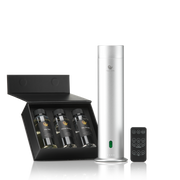
Waterless Aroma Diffuser Gift Set – Matte Black
Run it on the lowest of six intensity levels with the 1-hour timer before bed. Includes 3 × 120 ml hotel fragrance oils.

Day Dream Fragrance Oil – 120 ml
Already have a diffuser? Day Dream on its own: soft, warm and gentle. 120 ml.
Why bedrooms need a different approach
Most rooms are scented for people passing through or sitting in them for an hour or two. A bedroom is scented for someone lying still in it for seven or eight hours, at a distance of a metre or less from wherever the diffuser sits. A scent that reads as pleasantly present in a living room can feel overwhelming at bedside proximity over a full night. The room is also usually smaller and more enclosed than a living space, so fragrance concentrates rather than dispersing the way it would in an open-plan area.
Choosing a bedroom-appropriate note
Soft, low-register notes work best: musk, vanilla, soft floral, light woods. These read as calm and enveloping rather than sharp or attention-seeking. Strongly citrus, ozonic or spice-forward blends — which work well in living rooms and entryways — tend to feel more energising than restful in a bedroom, which is generally the opposite of what the room is for. Day Dream is built around exactly this softer register, designed to read as calm rather than assertive at close range.
Intensity and timing
Run the diffuser on its lowest setting in a bedroom — the proximity does the work that a higher setting would do in a larger room. Many customers set it to run for 30–60 minutes before bed rather than through the whole night, which scents the room enough to notice on entering without a lingering strong presence at 3am. This also extends how long a bottle of oil lasts, since a bedroom needs meaningfully less output than a living room of the same size.
Placement in a small room
The placement principles are the same as anywhere else — open surface, away from a wall, clear airflow — but scaled down. A bedside table or a low dresser away from the bed itself works better than directly on a nightstand within arm's reach, both for comfort and so the scent has room to disperse before reaching you. See our full guide on diffuser placement for the general principles, which apply at a smaller scale here.
A note on sensitivity
Because a bedroom is used at close range for long periods, it is worth paying attention to how a scent feels after a few nights rather than judging it on the first evening. If a fragrance that seemed pleasant initially starts to feel too present after a week, that is usually a sign to lower the intensity rather than switch scents entirely.
Frequently Asked Questions
Should I run a diffuser all night in the bedroom?
It is not necessary. Many people run it for 30–60 minutes before bed, which scents the room without a strong presence lingering at close range through the night, and uses less oil over time.
What scent notes work best in a bedroom?
Soft, low-register notes such as musk, vanilla, soft floral and light woods generally work better than sharp citrus or spice-forward blends, which can feel more energising than restful at close range overnight.
Where should a diffuser go in a bedroom?
A low dresser or console away from the bed itself works better than directly on a nightstand, giving the scent room to disperse before reaching you at close range through the night.
Related: Where to Place a Diffuser for the Best Scent Coverage · Is a Waterless Diffuser Safe for Kids and Pets? · Which Home Fragrance Matches Your Interior Style?