

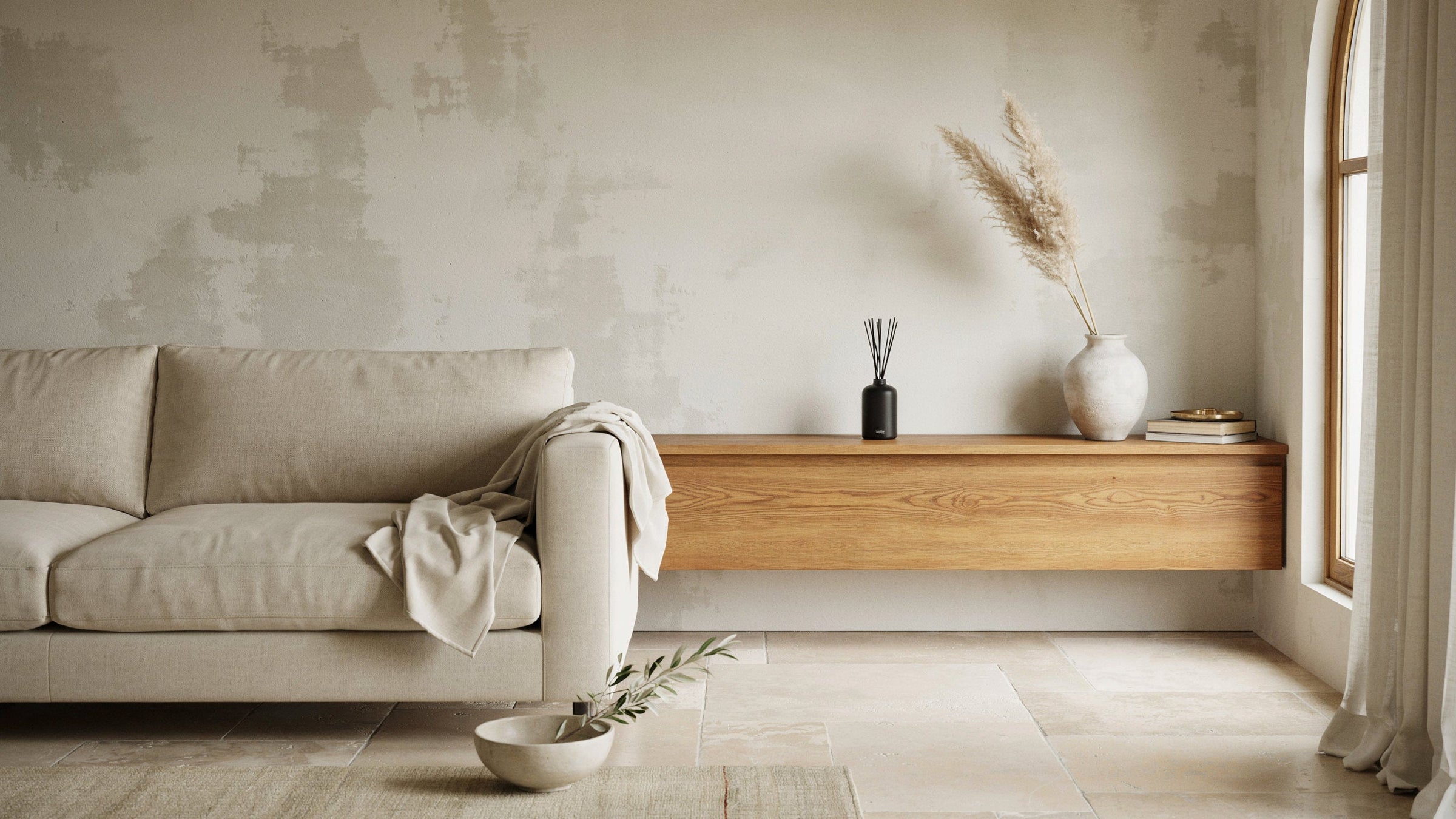
Scent is the part of a room you cannot see, but it is the part you feel first. A space can be styled perfectly and still feel unfinished if it smells of nothing — or worse, of something that fights the mood. The simplest way to choose a home fragrance is to treat it like any other design decision: match it to the style of the room.
Here is how the main interior styles pair with scent.
Minimalist and Scandinavian
Clean lines, pale wood, lots of light. These rooms want a fragrance that feels like air rather than perfume: crisp, fresh, and quiet. Think white tea, cotton, soft citrus, or a clean marine note. Anything heavy or sweet will feel at odds with the restraint of the space. Ocean Breeze suits this style well — fresh and understated, present without drawing attention.
Classic and elegant
Rich textures, considered furniture, a sense of calm formality. This is the style most associated with luxury hotels, and it carries deeper, more composed fragrances beautifully: warm woods, soft amber, a touch of musk. The One was composed in this register — refined and enveloping without being overpowering.
Warm, boho and eclectic
Layered textiles, plants, collected objects, plenty of personality. These rooms can carry more character in their scent: spiced warmth, soft floral, a hint of sweetness or resin. The aim is a fragrance that feels lived-in and inviting rather than polished. Day Dream brings that softer, more characterful warmth.
Coastal and modern
Light, breezy, open to the outside. Scent here should echo fresh air and open windows: marine notes, light citrus, a clean greenness. Keep it airy and uncomplicated so it reads as natural rather than added. A fresh profile like Ocean Breeze fits this style almost by definition.
How to apply it across the home
You do not need a different fragrance for every room. Choose one signature scent that matches your overall style for the open, shared spaces, and keep anything stronger for smaller rooms. The delivery matters as much as the scent: a cold-air diffuser such as the Pip & Wells waterless scent diffuser lets you set the intensity to each room, so a large open-plan space and a compact study can share one fragrance without one being overwhelmed and the other barely scented.
If you are not sure which direction suits your home, the Hotel Fragrance Oils set lets you try three profiles across different rooms before settling on your signature.
Frequently Asked Questions
Should every room have the same fragrance?
Not necessarily. A single signature scent across open, shared spaces creates a cohesive feel, while smaller rooms can carry something different or stronger. The key is to avoid competing fragrances meeting in the same airflow, which can clash.
What is a signature home scent?
A signature home scent is one fragrance you use consistently so your home has a recognisable identity — the way a hotel does. Choosing one that matches your interior style makes the scent feel like a natural part of the space rather than an addition.
Which fragrance suits a minimalist interior?
Crisp, fresh and quiet profiles work best — white tea, cotton, soft citrus or a clean marine note. They complement the restraint of a minimalist space rather than competing with it. Heavy or sweet scents tend to feel out of place.
Related: The Best Scent for Your Living Room · What Does a Luxury Hotel Actually Smell Like? · Which Scent Diffuser Is Best?