





To scent your home before guests arrive, begin with a neutral base: deal with cooking residue, bins, damp textiles and stale air before adding fragrance. Then choose one restrained scent anchor for the entrance or sitting area. Keep the dining space quiet while food is being served, because aroma is part of how flavour is perceived. Reassess only when the gathering changes phase, such as when everyone moves away from the table. The aim is not to make fragrance the main event. It is to give the evening a composed opening, then leave enough space for dinner, conversation and the character of your home. Hosting in December? Our guide on making your house smell like Christmas covers trees, cooking and candles.
The most thoughtful hosting scent plan has an empty middle. Fragrance welcomes people in, steps back for the meal, and can return quietly once the table is cleared. That rhythm is more useful than turning a diffuser up and hoping one setting suits the entire evening.

Ready before the doorbell
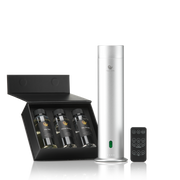
Waterless Aroma Diffuser Gift Set – Matte Black
Start a 1-hour session before guests arrive and let it switch off by itself. Includes 3 × 120 ml hotel fragrance oils.
Start with a neutral base, not another layer of fragrance
Home fragrance works best as atmosphere, not camouflage. Before choosing a scent, walk through the rooms your guests will actually use and remove the obvious competing sources.
- Ventilate when the weather, room and household allow it.
- Empty food waste and check bins in the kitchen and guest bathroom.
- Put away damp tea towels, bath mats or coats.
- Check sinks and drains for anything that needs ordinary household attention.
- Clear strongly scented cleaning products before guests arrive.
- Close doors to rooms that are not part of the evening.
This is the neutral-base check: the home should smell recognisably clean and lived in before fragrance is introduced. A diffuser should not be expected to remove cooking aromas or replace cleaning and ventilation.
Do this check before cooking if possible. It is easier to notice a stale hallway or damp textile before onions, spices, baking or roasting begin to shape the air.
Choose one anchor for the guest journey
An anchor is the one fragrance role that connects the entrance with the first place people gather. It is not a different oil in every room. Think of it as the opening note of the evening.
For most gatherings, a hallway or living area is the natural focus. If you want a warm profile, The One combines bergamot and fresh citrus with white tea, jasmine, sandalwood, warm amber and musk. Its current Pip & Wells positioning includes hallways, living rooms and open-plan spaces, which makes it a relevant example for arrival and pre-dinner conversation.
The fragrance itself is only half the decision. The other half is restraint. Begin from the lowest practical presence for your room and reassess from the doorway after you have spent a little time elsewhere. Do not use a universal setting or runtime: layout, airflow, open doors, cooking and personal sensitivity all change what feels appropriate.
If you are still choosing a profile, the living-room fragrance guide helps with broader note directions. Keep that choice separate from the hosting plan: this article is about when fragrance should lead, pause and return.
Follow a five-stage hosting timeline
Use phases rather than a rigid countdown. A small flat with drinks and snacks behaves differently from a large home, an open kitchen or a long dinner. The sequence matters more than an exact number of minutes.
1. Before cooking: clear the canvas
Complete the neutral-base checklist, decide which rooms are in use and choose one anchor. If you already use a diffuser regularly, notice whether the fragrance is still present from earlier in the day. Adding more simply because guests are coming can make the opening feel heavier than intended.
2. After cooking: deal with the source first
When cooking is finished, clear pans, packaging and food waste. Ventilate if appropriate and let the room settle. Do not try to cover a strong cooking aroma with more fragrance. If the kitchen and dining area share one airspace, that is a reason to use less, not to create a stronger counter-scent.
3. Before arrival: make one doorway check
Step outside the main scented area for a short while, then return through the route your guests will take. Ask three questions: Is the fragrance recognisable without searching for it? Does it belong to the entrance or sitting area rather than the table? Is anything else competing with it?
Change only one variable if needed. With the Pure One aroma diffuser gift set in matte black with three fragrance oils, you begin with the diffuser and three 120 ml fragrance oils in one set. There is still no single guest-ready setting that suits every home. Follow the product instructions and judge the actual room.
4. During the gathering: let the event take over
Once guests arrive, avoid repeatedly adjusting fragrance in response to every open door or brief change in airflow. The entrance may become less noticeable as people move through it, and that is not automatically a problem. Conversation, drinks and food should become the focus.
When the meal begins, keep fragrance around the dining zone restrained. Smell and taste work together to create our perception of flavour, so a pronounced ambient fragrance can compete for attention even when it is pleasant on its own. There is no need to make the dining area completely scentless, but the food deserves the clearest voice.
5. After dinner and the next morning: reassess, do not stack
If everyone moves back to the sitting room after dinner, reassess from the doorway before changing anything. You may decide the original anchor is still enough. If not, adjust one variable at a time. Do not mix finished oils or introduce an untested pairing simply to mark the transition.
The next morning, return the home to its ordinary rhythm. Clear glasses, food and textiles first, then ventilate as appropriate. If an overnight guest is staying, a soft profile may suit a separate reading corner or guest room, but it should be chosen for that space rather than layered onto the previous evening. Day Dream, with peach blossom, soft pear, peony, rose, cashmere, white musk, cedarwood and soft vanilla, is currently positioned for bedrooms and quieter spaces. This is a note-direction example, not a promise about sleep or relaxation.
Let food lead at the table
A useful boundary is simple: fragrance can frame arrival, but it should not compete with the meal.
That matters most when the menu is aromatic or delicate. A curry, slow roast or baked dessert already changes the room. So can fresh bread, herbs, coffee and wine. These aromas are part of the occasion rather than problems to erase.
For an open kitchen and dining room, place your emphasis on the entrance or sitting end of the space and keep the shared dining air more restrained. If the room cannot be separated, consider pausing or reducing ambient fragrance while the food is served, following the device instructions. After the table is cleared and guests move, reassess rather than automatically returning to the earlier level.
For everyday whole-home atmosphere outside an event, our diffuser guide helps you choose a suitable diffusion method. During a dinner, choreography matters more than continuous coverage.
Match the plan to the way you are hosting
| Hosting format | Fragrance focus | Suitable note direction | What to avoid | When to reassess |
|---|---|---|---|---|
| Casual drinks | Entrance and main sitting area | Fresh citrus, white tea or a restrained warm base | Adding a second scent when snacks arrive | After doors have been opening or guests move rooms |
| Dinner at home | Entrance before the meal; quiet dining zone | One subtle anchor that does not crowd the menu | Strong fragrance beside the table or active cooking | Once food is served, then again after the table is cleared |
| Overnight guest | Arrival route, then a separately considered guest space | A softer floral, fruit or wood profile if appropriate | Carrying the evening's full intensity into the bedroom | After the evening ends and again the next morning |
The table is a decision aid, not a formula. Guest numbers, room size, airflow and individual preferences matter more than the event label.
Use the one-anchor checklist
Before the doorbell rings, check the plan in under a minute:
- Have I dealt with the source of any unwanted household smell?
- Is there one clear fragrance anchor rather than several competing ones?
- Can the food remain the main aroma around the table?
- Have I judged the scent from the guest's route, not only from beside the diffuser?
- Will I change just one variable if the room needs adjustment?
- Do I know when to step back because a guest prefers less fragrance?
If you use fragrance more often for entertaining, remember that longer schedules can affect consumption. The guide to how long diffuser oil lasts explains the variables without turning bottle life into a fixed promise.
When less fragrance is the better welcome
Some guests notice fragrance more readily than others, and preferences or sensitivities may not be visible. If someone asks for less, make comfort the priority: reduce or stop use according to the product instructions and ventilate when appropriate. Labels, placement and keeping fragrance oil out of reach also remain part of responsible use.
Restraint is especially sensible when young children or pets will be present, when the gathering is centred on tasting food or wine, or when the home already carries strong seasonal flowers, a fire or cooking aromas. Do not describe any home fragrance as universally safe or suitable for every guest.
Frequently asked questions
When should I turn on a diffuser before guests arrive?
There is no universal pre-arrival runtime. Start only after the neutral-base check, follow the device instructions and assess your own room from the entrance. Layout, airflow, open doors and existing fragrance all affect the result.
What is the best home fragrance for a dinner party?
Choose one restrained profile that suits the entrance or sitting area and does not compete with the menu. Fresh citrus, white tea, soft woods or a gentle amber base can provide direction, but the room and food matter more than a universal best scent.
Should I place a diffuser near the dining table?
Usually, the more useful focus is the entrance or sitting area. Aroma contributes to the perception of flavour, so keep strong ambient fragrance away from food and reassess once the meal is over.
Can I use one fragrance before dinner and another afterwards?
You can reconsider the atmosphere when guests move rooms, but avoid mixing finished oils or presenting an untested pairing as a proven combination. A simpler approach is to keep one anchor and alter only one approved control at a time.
How do I make my home smell good after cooking?
Clear the cooking source first: deal with pans, food waste and damp textiles, then ventilate when appropriate. Let the air settle before deciding whether any ambient fragrance is needed. Fragrance is not a substitute for source removal.
What if a guest is sensitive to fragrance?
Prioritise the guest's comfort. Reduce or stop use according to the device instructions, ventilate when appropriate and do not insist that a low setting is suitable for everyone.
A welcome with room to breathe
Good hosting fragrance has timing as well as character. Prepare the room, choose one anchor, let food lead and reassess when the evening changes shape. The quietest part of the plan may be the most important: knowing when the home already has enough atmosphere.
When you are ready to create that single arrival anchor, explore The One or compare it with the wider Pip & Wells fragrance collection. Keep the choice simple, then let the evening become its own story.