

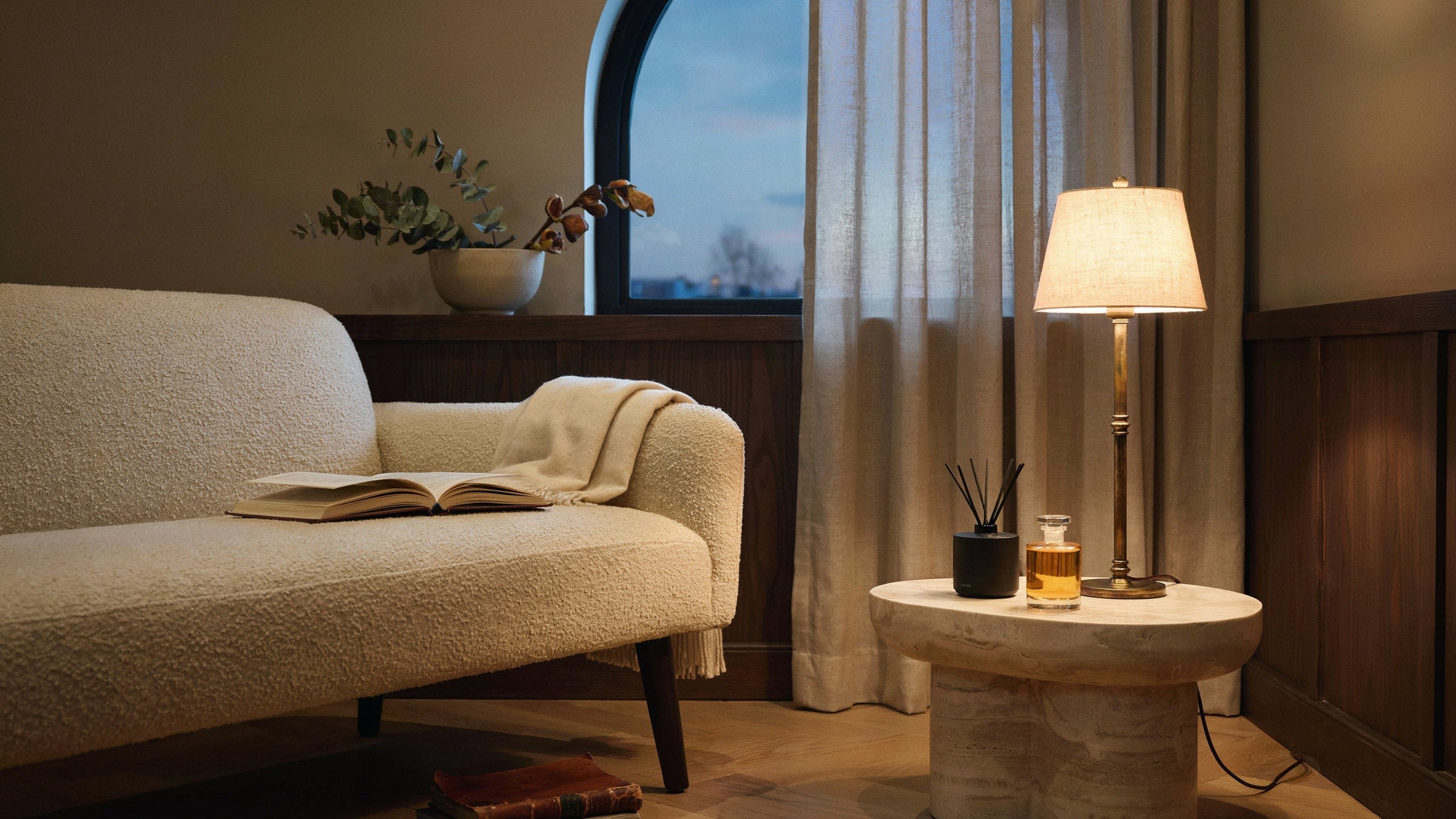
There is a particular quality to the smell of a genuinely fine hotel. It is not any single fragrance you could point to. It is a feeling — warm, composed, quietly expensive. It arrives before you have registered the lighting or the furniture.
The Short Answer
Luxury hotel scents follow a consistent structure: a fresh citrus or tea top note, a refined floral or green heart, and a warm base of sandalwood, cedar, amber and clean musk. The specific notes differ by brand. The structure rarely does — and that structure is what reads as luxury.
Hotel Scent Is Never an Accident
The fragrance in a luxury hotel lobby is not the result of good cleaning products, fresh flowers or fortunate ventilation. It is a designed experience — commissioned from professional perfumers, tested extensively, and delivered through engineered diffusion systems so every guest meets the same scent at the same intensity.
This discipline is called scent marketing, and the leading hotel groups invest significantly in it. Smell connects to memory and emotion by a more direct neural route than sight or sound. A guest may forget the colour of the carpet within weeks. They tend to remember how the place smelled, because that impression is encoded alongside the emotion of the stay.
The Common Ingredients Behind Luxury Hotel Scents
Despite the variety of hotel brands worldwide, most luxury hotel fragrances draw on a consistent palette. These ingredients recur not because designers lack imagination, but because they work: complex enough to feel considered, restrained enough to feel effortless, warm enough to feel welcoming.
Base notes — the foundation
- Sandalwood: warm, creamy, grounding. Creates depth and permanence without heaviness.
- Cedar: drier and more structured than sandalwood. Adds clarity and a faint woody sharpness.
- Amber: a warm, golden-toned accord that reads as quietly luxurious. Not sweet, not sharp.
- Clean musk: adds longevity and depth without animalic heaviness. Holds everything else together.
- Vetiver: earthy and smooth. Used sparingly, it adds an unexpected dimension.
Heart notes — the character
- White tea: delicate, slightly green, calming. One of the most common mid-notes in modern hotel fragrance.
- Fig leaf: green and subtly creamy — sophisticated without being floral.
- Iris: powdery and architectural. Frequent in contemporary signatures.
- Restrained jasmine: when used at all, only as a whisper. Richness without florality.
Top notes — the first impression
- Bergamot: bright, fresh, subtly sweet. The most common hotel top note.
- Lemon peel: crisp and clean. Often paired with bergamot for a sharper citrus edge.
- Green accord: cut stems, grass, light leaves. Creates an immediate sense of space.
- Sea salt or ozone: used in coastal and resort properties for openness.
Notice what is absent. No cinnamon. No heavy vanilla. No dominant rose or lily. No fruity gourmands. No synthetic sweetness. The palette is built around a deliberate absence of anything obvious, sugary or product-like. It smells of a place, never of a thing.
Signature Scents of Well-Known Hotels
Hotel fragrance formulas are proprietary and are rarely published in full. The descriptions below are drawn from brand communications and industry reporting, and describe the character of each signature rather than an exact formula.
Westin Hotels — White Tea
The most widely documented hotel signature, and one of the few sold commercially for home use. White tea, geranium and cedar at its core, with fig and bergamot reported in the top. Fresh, slightly green and lightly woody — modern without being cold.
1 Hotels
A nature-led composition described around sandalwood, fig leaf, cucumber and amber. Grounded and botanical, reflecting the brand's emphasis on natural materials. One of the clearer examples of scent reinforcing a brand identity.
Shangri-La
Reported as sandalwood, ylang-ylang, jasmine and subtle amber. Warm and calming, with the jasmine sitting inside the warmth of the sandalwood rather than dominating it.
Mandarin Oriental
Described around tuberose, lily, amber and light musk. More floral than most luxury hotel signatures, but executed with restraint — the florals serve the warmth rather than overwhelming it.
Bulgari Hotels
Reported as bergamot, neroli, musk and a soft powdery finish. Citrus-forward on first encounter, with a long, clean drydown.
The Pattern That Runs Through All of Them
Look at those five and the same structure emerges. A fresh or citrus top. A warm or floral heart. A wood-and-amber base over clean musk. Complex, but never loud.
This is the formula — not because designers copy each other, but because this structure works in a luxury shared space. It has to be present enough that guests register it, restrained enough that nobody finds it intrusive, complex enough to survive repeated exposure, and warm enough to signal comfort rather than sterility.
Fresh plus warm plus subtle reads as luxury. Deviate in any direction — add sugar, add dominance, add anything synthetic or single-note — and it stops reading as hotel and starts reading as air freshener.
Why This Matters for Your Home
Understanding the structure gives you a framework for choosing at home. You are not trying to identify a specific hotel's proprietary formula. You are applying the principles underneath it: warm base, refined heart, fresh top, restraint throughout.
The One was built around exactly this structure — warm amber and sandalwood at the base, a refined heart, a clean top — for living rooms and entryways. Day Dream and Ocean Breeze follow the same logic adapted to lighter or more contemporary spaces. The full range is in the hotel fragrance oil collection.
All are designed for cold-air nebulisation through the Pip & Wells waterless scent diffuser — the same category of technology hotel systems use so the fragrance reaches every corner evenly rather than pooling near the device. The practical method is in how to make your home smell like a hotel.
Frequently Asked Questions
What scent does the Westin use?
The Westin's signature is called White Tea — reported as a blend of white tea, geranium, cedar, fig and bergamot. It is one of the most recognisable hotel signatures and one of the few released commercially for home use.
Do all luxury hotels have a signature scent?
Most major luxury groups do. It is now a standard element of premium brand identity alongside visual and sound design. Smaller boutique hotels may use curated off-the-shelf solutions rather than bespoke compositions, but intentional ambient scenting is near-universal at the high end.
Why does every luxury hotel smell different but feel the same?
Because they follow the same underlying structure: warm base, refined heart, fresh or clean top, delivered at restrained intensity. The specific notes differ; the formula does not. That is why a Westin and a Shangri-La smell completely different from each other yet both read as luxurious.
Can I buy the actual fragrance a specific hotel uses?
In most cases no — hotel signatures are proprietary and not retailed publicly. The Westin is one of the rare exceptions. For most properties the closest you can get is a fragrance built on the same structural principles: warm wood base, clean or citrus top, restrained complexity throughout.
Why does hotel scent feel so effortless, never too strong?
Two reasons: the fragrance is composed for restraint, and the delivery distributes it evenly rather than concentrating it near one source. Cold-air nebulising systems fill the space at a consistent low level, so the scent registers as part of the atmosphere rather than as a distinct smell.
What is the best way to recreate a hotel scent at home?
Choose a fragrance built on warm wood and amber base notes with a fresh citrus or tea top. Deliver it through a cold-air nebulising diffuser positioned centrally, run on low to medium intensity. The full setup is in which scent diffuser is best.
Related: Which Home Fragrance Matches Your Interior Style? · The Best Scent for Your Living Room · Which Scent Diffuser Is Best?